Legal Issues
Is homeschooling legal? Which laws pertain to homeschoolers and which don't? How do homeschoolers protect their rights to freely educate their children and to preserve their privacy?
Political and Legal Support for Homeschoolers in Mississippi
Alliance for the Separation of School & State
An advisory group concerned with educating people about the need to eliminate government involvement in education and the rights of parents to educate their own children. On this site, you will find a public proclamation for the separation of school and state, which you can sign.
National Charter School Watch List
This list is created to be a means of informing, documenting and evaluating available information concerning the impact of virtual/charter schools on the homeschooling community. This information consists of and is not limited to news items, articles from various sources, legislative information (bills, law changes), documented efforts and experiences and other information that may give weight to whether home-based charter schools or virtual schools are having an impact in any negative way on homeschooling.
Legal Issues Affecting the Homeschool Community
On Jumping Through Hoops
Most books and articles on home education are quick to point out that homeschooling is legal--in one form or another-- in all fifty states. Parents might have to jump through more hoops in one state than in another, but, as long as they're willing to jump through those hoops, they are allowed to teach their own children at home. But are these hoops actually necessary?
State Laws Concerning Participation of Homeschool Students in Public School Activities
This is a list of states that have addressed issues of homeschooler participation in public school classes, sports,
activities, etc.
Political Influence
Every important movement or trend in this country was followed by an onslaught of legislative actions which resulted in some legal stipulations that controlled the trend. What is really of concern is that this legislative control is not static, but very fluid, subject to change (meaning more restrictions in many cases). These changes occur through either more legislative actions on the part of the government or through interpretation in the judicial system. Currently, the homeschool movement is being closely monitored by various teacher unions, the public and legislative bodies throughout the United States, resulting in more and more laws being passed to control or monitor the movement. If the homeschool movement is to survive in a manner which we feel would be beneficial to us and society as a whole, we have to be more and more diligent in protecting our rights. The only way we can do this is to be more active in the political process. The question now becomes, how do we do this?
The Seduction of Homeschooling Families
Do the public school authorities feel threatened by homeschooling? Judging by their efforts to lure homeschooling families into dependence on local school districts, the answer is apparently yes.
Social Security's New Home School Flow Chart
For some years, the Social Security Administration has permitted home schoolers to receive benefits in some cases. The agency used a fuzzy test involving several different factors. New documents from the Social Security Administration indicate that the agency has a much better defined policy in place now.
How to Suppress Homeschooling
The education establishment has realized that the socialization issue will be seen for the red herring that it is, and has searched for other means to suppress homeschooling. Two new strategies have emerged, and these pose real threats to homeschooling. The first strategy is to argue that homeschooling needs some form of accreditation. A number of reasons have been offered: it eases the transition back to the public school for those homeschoolers who go back, it is the basis for awarding a recognized diploma, and it makes it easier to provide homeschoolers access to public school programs and facilities such as science classes, libraries, sports, etc. But accreditation is simply another word for conforming, and the desire to not conform is the fundamental reason for choosing to homeschool. Homeschoolers as a group will not be seduced nor will they be tricked by the false promises of accreditation.
The second strategy for suppressing homeschooling is one that is much more likely to be successful, and it is to drastically limit homeschoolers’ access to public higher education. In this, the education establishment has discovered its only effective weapon against homeschooling.
Battling for the Heart and Soul of Home-Schoolers
A look at the battle for the homeschooling movement and the demographics of homeschooling families that challenges the notion that all homeschoolers are conservative fundamentalists. This article is a critical look at the HSLDA.
Homeschooling Litigation: Preparing the Way
The greatest obstacle pioneering homeschoolers faced two decades ago was daunting: in most states home education wasn't legal. This article details five of the most significant cases that have become landmark decisions in the move towards homeschooling freedoms: the DeJonge case in Michigan, the Jeffery case in Pennsylvania, the Diegel case in Ohio, the Triple E case in South Carolina, and the Calabretta case in California.
Keeping Homeschooling Private
Homeschoolers have been vigilant in protecting their rights, rising to the occasion when they discover threats to clamp down on their activities. Discusses some of the criticisms by opponents of homeschooling, along with the examples of some legal fights in Connecticut and Montana.
The New Face of Homeschooling
As their ranks increase, homeschoolers are tapping public schools for curriculum, part-time classes, extracurricular services, and online learning.
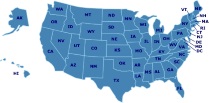
Looking for Another State?
Featured Resources
As an Amazon Associate, we earn from qualifying purchases. We get commissions for purchases made through links on this site.

Homeschooling: A Patchwork of Days: Share a Day With 30 Homeschooling Families
From a bedroom community in Nebraska to a farm in Vermont, from families who rely on workbooks to those who have sworn them off, this in-depth examination of the lives of homeschoolers covers a wide range of people and methods. When author Nancy Lande started homeschooling more than 10 years ago, this is the book she wanted that didn't exist. What better way to create your homeschool than reading about others and picking and choosing the styles that appeal to you? Lande has corralled a variety o...
Montessori International
Montessori International is the magazine for all parents and teachers. Montessori International magazine is a high quality colour education magazine with a Montessori focus and a truly child-centred approach. The magazine is for Montessori parents, nursery owners, teachers, and students with an interest in Montessori education.
Writing Strands & Reading Strands
This program is based on research which shows that there is no useable relationship between the study of grammar as an abstracted skill and the ability to communicate. Writing Strands provides quality reading, writing and speech materials for homeschoolers with children ages 3 through 18. The guided exercises in Writing Strands progress incrementally and allow students to work independently, yet provide the guidance students need to sharpen their ability to inform, persuade and entertain in writ...

Raising Topsy-Turvy Kids: Successfully Parenting Your Visual-Spatial Child
Understanding how children learn best allows you to meet their needs and help them succeed. A visual-spatial learner remembers things in pictures and learns better with visual clues and strategies. This book addresses those needs and helps you figure out how to encourage this type of learner in your homeschool environment.

Montessori: A Modern Approach
Montessori: A Modern Approach has been called the single best book for anyone -- educator, childcare professional, and especially parent -- seeking answers to the questions: What is the Montessori method? Are its revolutionary ideas about early childhood education relevant to today's world? And most important, especially for today's dual-career couples. Is a Montessori education right for my child?Paula Polk Lillard writes both as a trained educators and as a concerned parent -- she has many yea...